Louis Vuitton Trunks: Timeless Elegance Since 1858
2 February 2024
Cambi Auction House presents the “Fashion Vintage” timed auction, online at cambiaste.com until February 13, 2024. Chanel, Louis Vuitton, Gucci, Hermes, Celine, Bulgari, Cartier, Prada, and all the Vintage in this auction represent fashion icons of timeless elegance. An auction that celebrates and preserves the timeless appeal of trends through the years, offering an eclectic selection of fashion accessories, luxury handbags, and high-quality vintage items. Among the iconic brands in the catalog, Louis Vuitton stands out with a selection of important lots, including accessories, handbags, luggage, and the legendary trunks.

The history of Louis Vuitton’s signature trunks began in 1837 when 16-year-old Louis Vuitton moved to Paris and began working at the workshop of master craftsman Monsieur Maréchal, becoming a trunk maker. After years of experience, the young man decided to strike out on his own and open the Louis Vuitton Malletier atelier at 4 Rue Neuve-des-Capucines, near Place Vendome.

In addition to his talent for craftsmanship, Louis Vuitton had the insight that it was necessary to create a solid, reliable, and functional “traveling companion” to meet the transportation needs of the time, but also an object that would meet the lavish tastes of wealthy customers. Indeed, people traveled for days by carriage, train, and ship, and often these journeys became social gathering places. In 1858 the first trunk was produced: a parallelepiped measuring 50x50x100 cm constructed of durable, waterproof canvas, a rectangular base, metal reinforcements and a flat lid instead of rounded as was in use at the time, which made it extremely durable, agile to carry and easily stackable. All these cutting-edge features meant that success was not long in coming and Vuitton’s name soon became in demand among the upper middle class.

To increase the brand’s recognizability and make it even more exclusive, in 1872 Vuitton replaced the Gris Trianon canvas with a red and white striped canvas, which would later be replaced four years later by the beige and brown striped Rayée pattern that would remain in use until 1888, when the Damier pattern first appeared. The real breakthrough would not come until 1896, however, when, after taking over his father’s company, Georges Vuitton invented the iconic monogram consisting of the initials LV and a Japanese-Victorian-inspired floral pattern. Another important device to be patented by the family heir would be the Tumbler Lock, an innovative five-drum spring-loaded locking system designed specifically to protect the contents of trunks from thieves that is still used today.

At the end of the 19th century, the company began to put all its savoir-faire at the disposal of the extravagance and eccentricity of its renowned customers seeking new travel experiences. Special orders competed for ingenuity and sophistication: this was the age of modern transportation, when people wanted to move around and be able to transport special items such as musical instruments, cots, shower stalls and whatnot. Over the years, a great many different models have thus been devised for a wide variety of functions, many of which were displayed in 2016 at the Grand Palais in Paris at the “Volez, Voguez, Voyagez – Louis Vuitton” exhibition.


Although new sections such as ready-to-wear were defined, luggage-so trunks, suitcases, bags, and everything travel-related-remained the brand’s most representative sector. Timeless icons that are reinterpreted today by great designers, artists and well-known personalities through important collaborations, opening the brand’s heritage to new horizons.

Today, the role of the Louis Vuitton trunk has changed. Its function is that of a jealously guarded treasure chest or that of an exclusive piece of furniture. As Louis Vuitton stated, “Trunks are extraordinary keepers of ancient memories. Upon opening an old trunk, myriad images, forgotten smells and curious anecdotes resurface. From the early 19th century to the present, hundreds of thousands have been produced. Each with its own history. Each with a different destination in the world. Some rest in the attic. Others are on display in a museum. Still others continue their journey.”

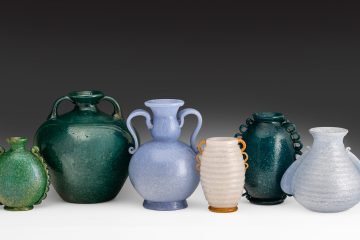
At Cambi Auction: Important Murano Glass
30 March 2026


Interview with Paolo Crippa – Director of the Numismatics Department
13 December 2025

Old Masters: Susanna and the Elders
9 December 2025
