Old Masters: Susanna and the Elders
9 December 2025
Cambi Casa d’Aste announces a day entirely dedicated to masterpieces of painting and old master prints, with two auctions to be held in Genoa on December 11, 2025. It will be a dual opportunity for collectors, scholars, and enthusiasts to admire and acquire works from important private collections, attributed to some of the most significant artists active between the 15th and early 19th centuries.
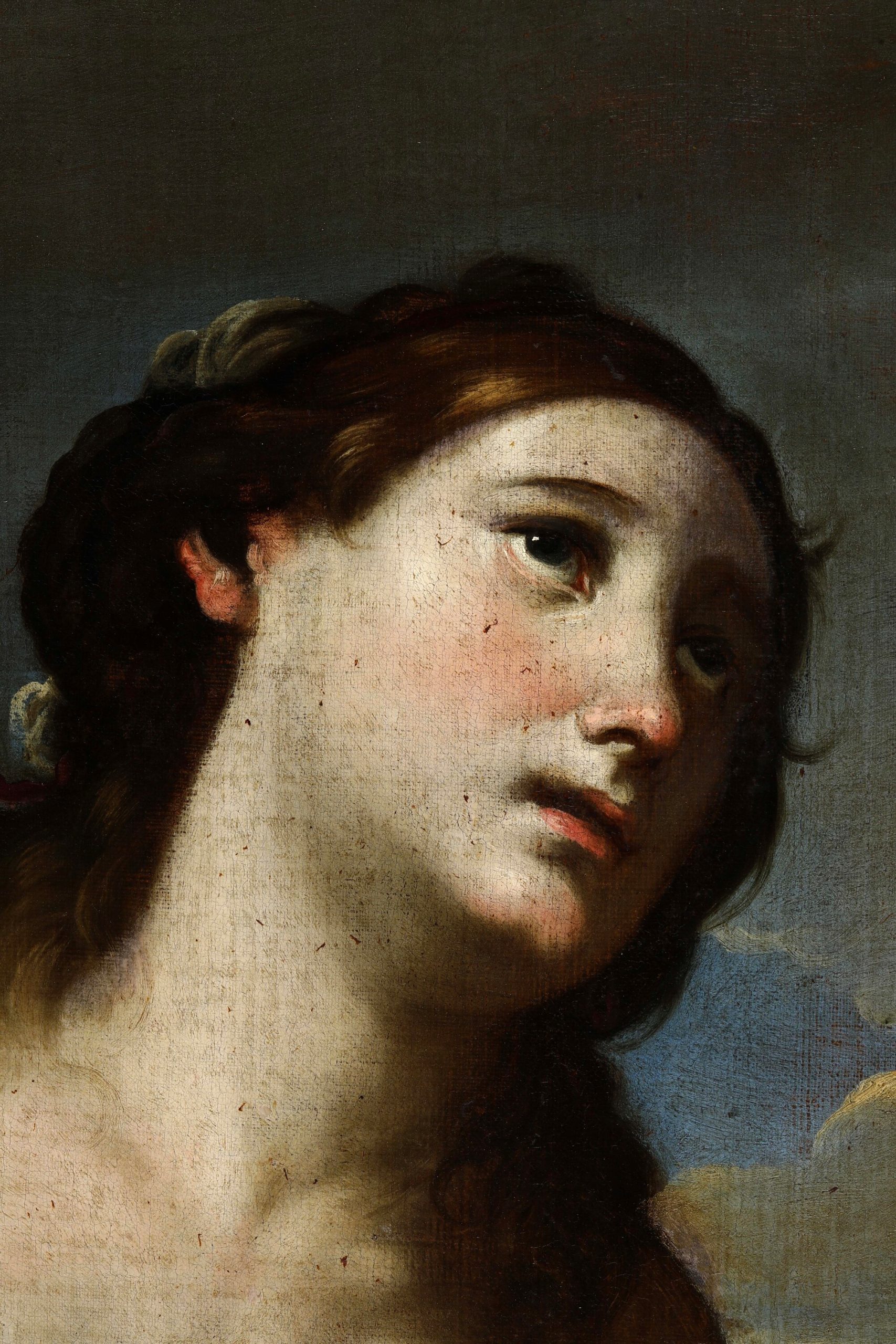
The Old Masters catalog features paintings, panels, and drawings from Italian and European schools, spanning the mature Renaissance, the Baroque, and the great seventeenth-century period. Among the most remarkable works is the extraordinary Susanna and the Elders by Mattia Preti (Lot 256), offered as an early youthful piece by the master and considered by scholars a key element for understanding the evolution of his Caravaggesque and Bolognese style. The plastic intensity, dramatic chiaroscuro, and emotional tension that permeate the scene fully convey the narrative power of Preti in the 1640s.
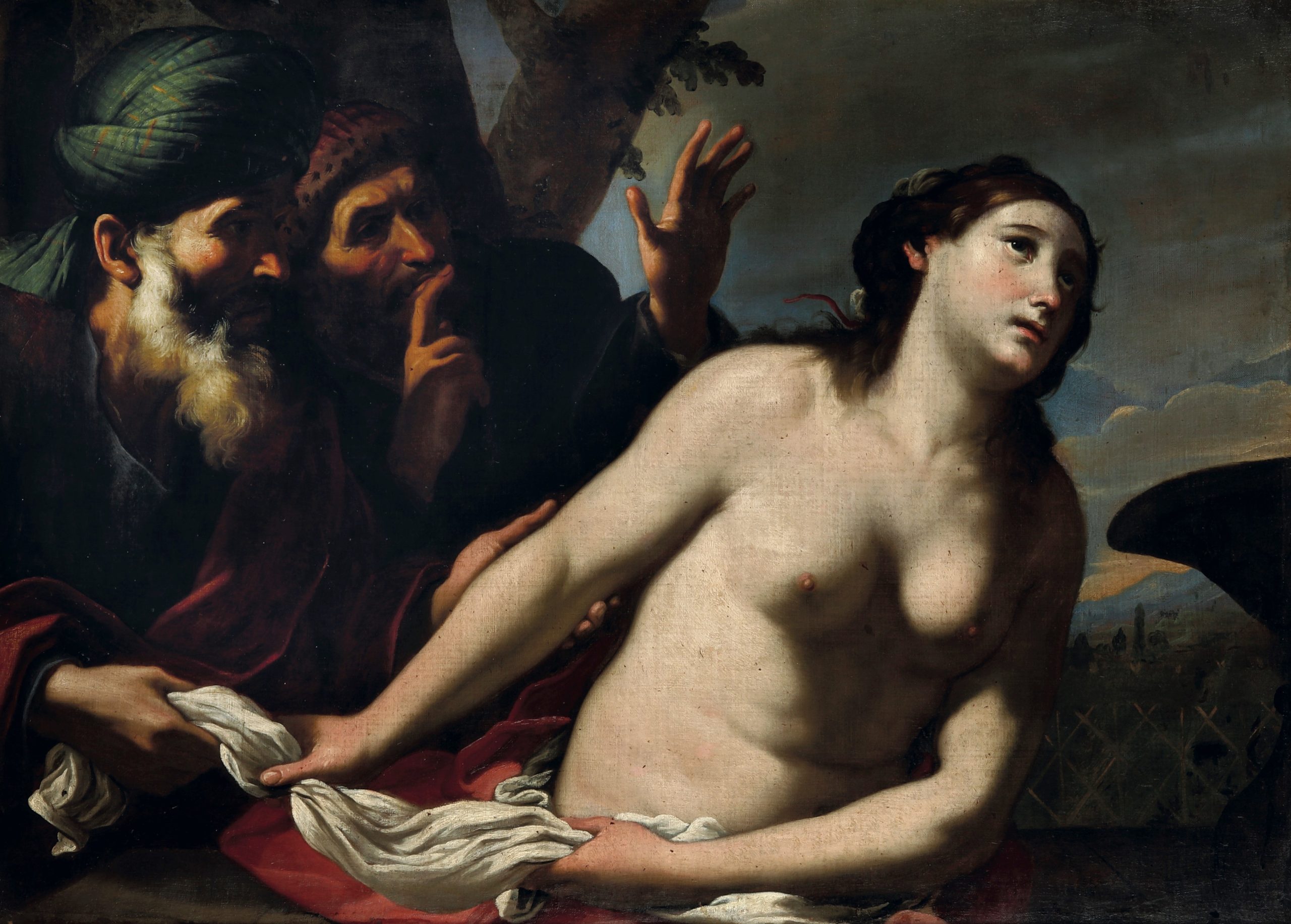
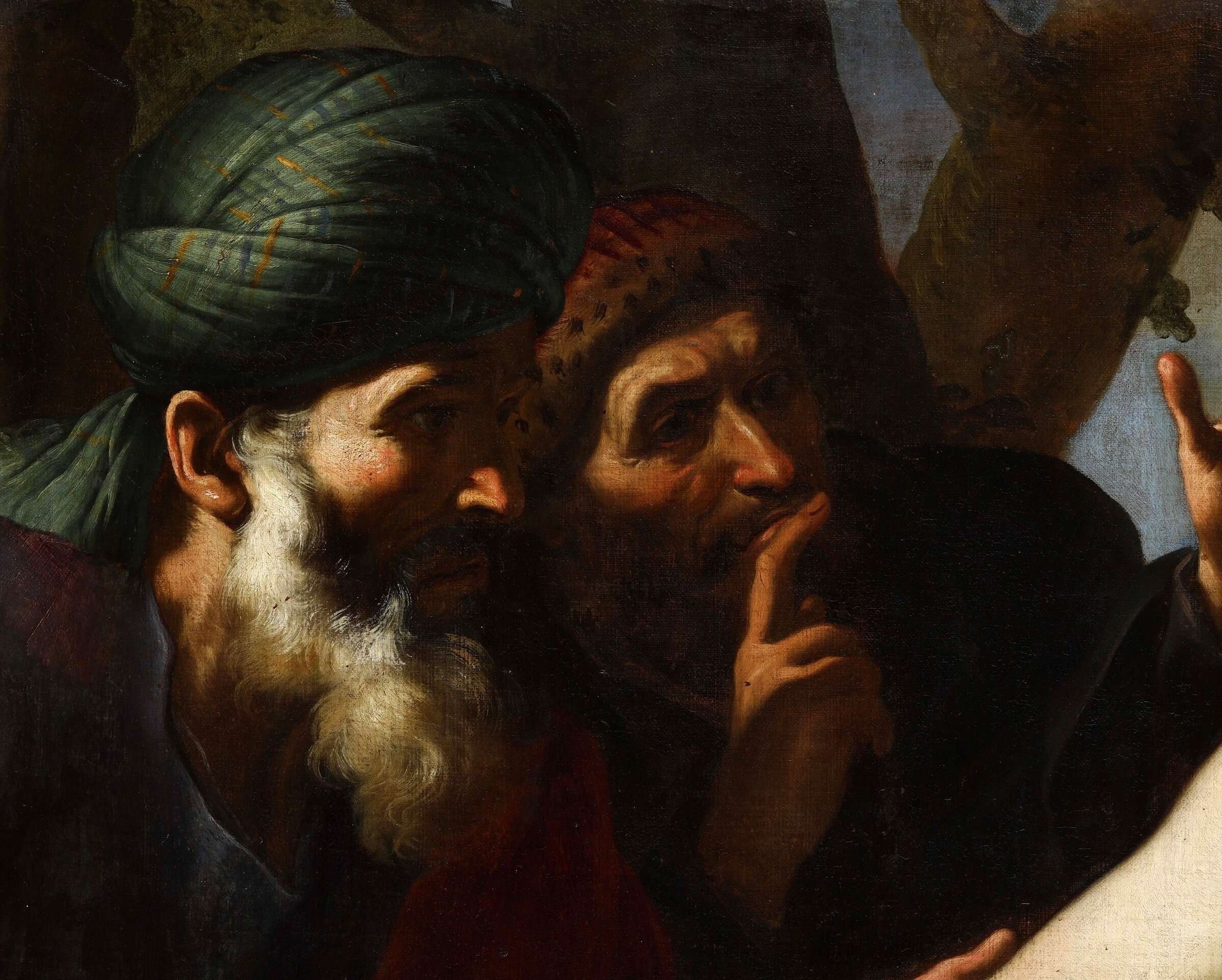
Outdoors, beside a fountain and sheltered by the shadow of a tree, a young woman bathes. Light coming from the left sculpts her torso with Caravaggesque intensity: compact, luminous, and strikingly beautiful. It is Susanna, captured at the moment she lifts her gaze upward, calling for help. Two men—neither young nor old—watch her in disbelief, overwhelmed by astonishment and desire. The first, with a thick beard, attempts to snatch the last edge of her white cloak; the other, with an authoritative gesture, threatens her, demanding silence.
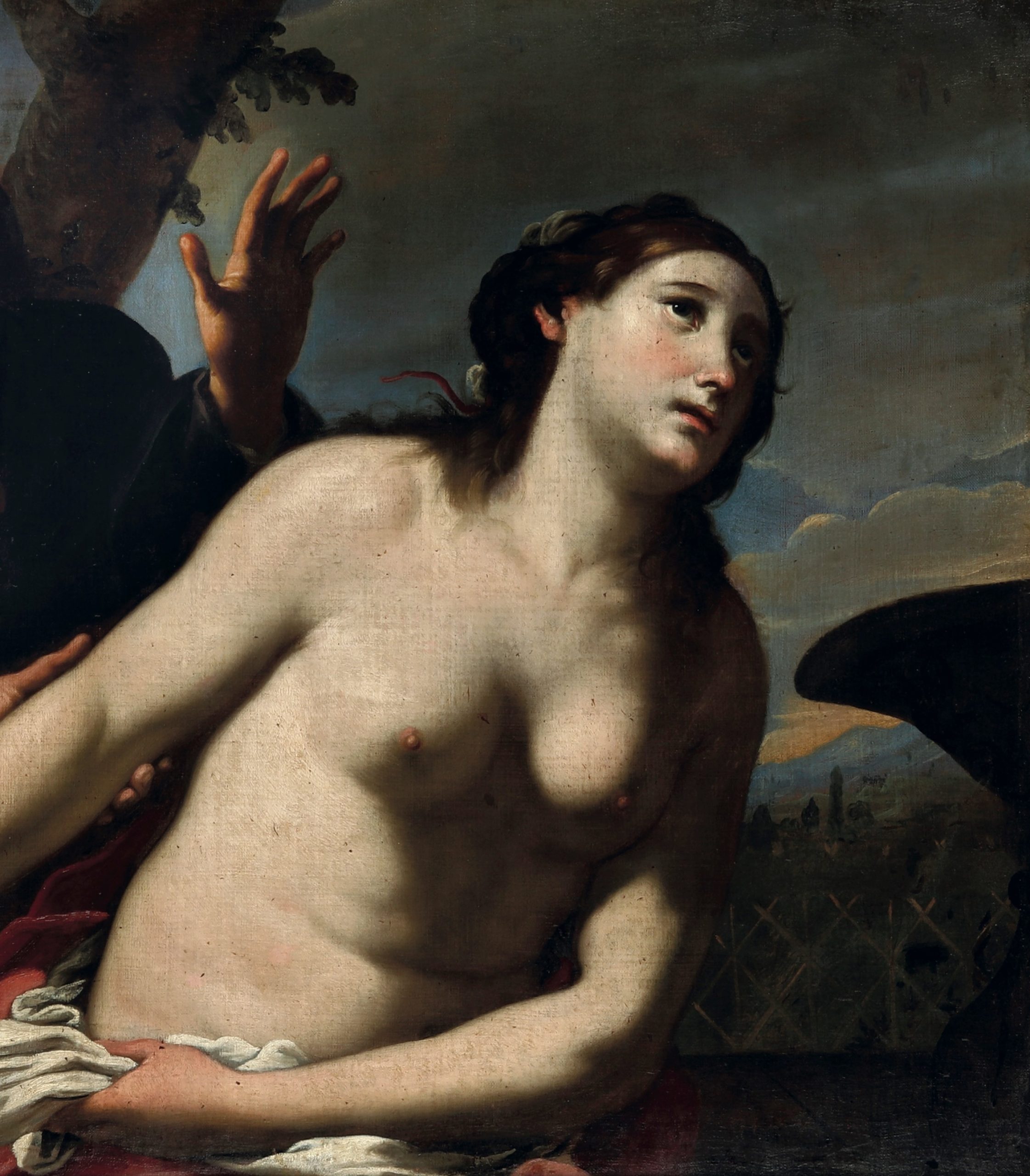
The atmosphere is charged with tension. The figures seem caught in a play of hands and glances that, in the powerful chiaroscuro, immediately recalls the language of Guercino. It is no coincidence that one is reminded of his Susanna at the Galleria Nazionale in Parma, dated around 1650. On the right edge of the canvas, the profile of the fountain reveals a fence leading to a sunset sky: a detail that expands the space and amplifies the drama.
The Return of a Beloved Baroque Subject
With this imposing seventeenth-century painting, the iconographic dossier of Susanna and the Elders, a story from the Book of Daniel, is reopened. The story is well known: after rejecting the advances of two judges, Susanna is slandered and accused of adultery. Condemned to be stoned, she is saved by the prophet Daniel, who exposes the lies of her persecutors.
The theme, beloved by Baroque painters, offered wide narrative possibilities: the female nude, voyeurism, and the power dynamics between the male gaze and the female body—all elements ideal for artists of the post-Caravaggesque period, particularly in Rome and Naples during the mid-seventeenth century. Here, visual culture drew from both Caravaggesque naturalism and Bolognese influences, as well as the decisive presence of a Spanish master such as Jusepe de Ribera.
It is in this fertile context that the painting under discussion is placed. Everything suggests that it is a youthful work by Mattia Preti, probably executed in Rome or Naples around the mid-1640s. Comparison with confirmed works from the painter’s so-called “early period”—such as Christ and the Canaanite Woman, recently confirmed as autograph—seems to support this hypothesis.
One of Mattia Preti’s First “Susannas”?
If so, this would be one of the earliest versions of the subject tackled by the Taverner master. Mattia Preti, who developed artistically between Naples and Rome before his long Maltese period, returned to the theme of the chaste Susanna multiple times. The culmination of this journey is the masterpiece now held by the Fondazione Longhi in Florence, dating from his Neapolitan years (1651–63). Roberto Longhi purchased it in 1946, entrusting its restoration to Mario Modestini—a treatment that revealed the protagonist’s décolleté, uncovering essential aspects for understanding the work.
It is unsurprising that in the new millennium, studies on Preti have regained the attention of art historians, thanks to renewed interest in Caravaggesque painting. Exemplary in this regard was the major exhibition at Palazzo Reale in Milan in 2006, which dedicated an entire section to the artist’s youthful production.
Naples, Ribera, and the Precursors of the Theme
Alongside the Caravaggesque component, the painting also shows strong ties to Neapolitan visual culture. Those familiar with this environment in the 1630s and 1640s will recall versions of the subject by Massimo Stanzione and Fabrizio Santafede, known as Pacecco De Rosa. Preti must have known well, for instance, Stanzione’s Susanna, now in Frankfurt, attributed by scholar Voss and dated to the 1630s. Pacecco’s choice, which expands the episode into a sort of narrative “tracking shot” as in the large Capodimonte painting, must have seemed less convincing to him.
Mattia, Not Gregorio: Clarifying a Possible Attribution Confusion
In recent years, research has also explored the work of Gregorio Preti, Mattia’s elder brother. Gregorio, active in Rome from 1624 but certainly passing through Naples, collaborated with his brother until the mid-1630s. However, despite some affinities, the painting under discussion cannot be attributed to Gregorio. Comparison with a Susanna and the Elders recently assigned to him shows differences that are too marked: Gregorio is more rigid, harsher in drawing, and less vibrant in color than Mattia, who is decidedly more skilled and original.
Catalogue note by Prof. S. Causa

At Cambi Auction: Important Murano Glass
30 March 2026


Interview with Paolo Crippa – Director of the Numismatics Department
13 December 2025