The Bust of Costanza Piccolomini Bonarelli and the Bernini Context
11 May 2026
After the great success achieved by the first Milan edition of Fine Art Selection, which last year marked an important debut for the Ancient Art department of Cambi Auction House in the Lombard capital, a new appointment will take place on May 20, 2026, dedicated to a selection of works spanning different centuries and styles.
The second edition of Fine Art Selection confirms the distinctive nature of the project: a catalogue conceived as a journey through European taste, organized chronologically to guide the public through a path that leads from the Middle Ages to the nineteenth century and Neoclassicism.
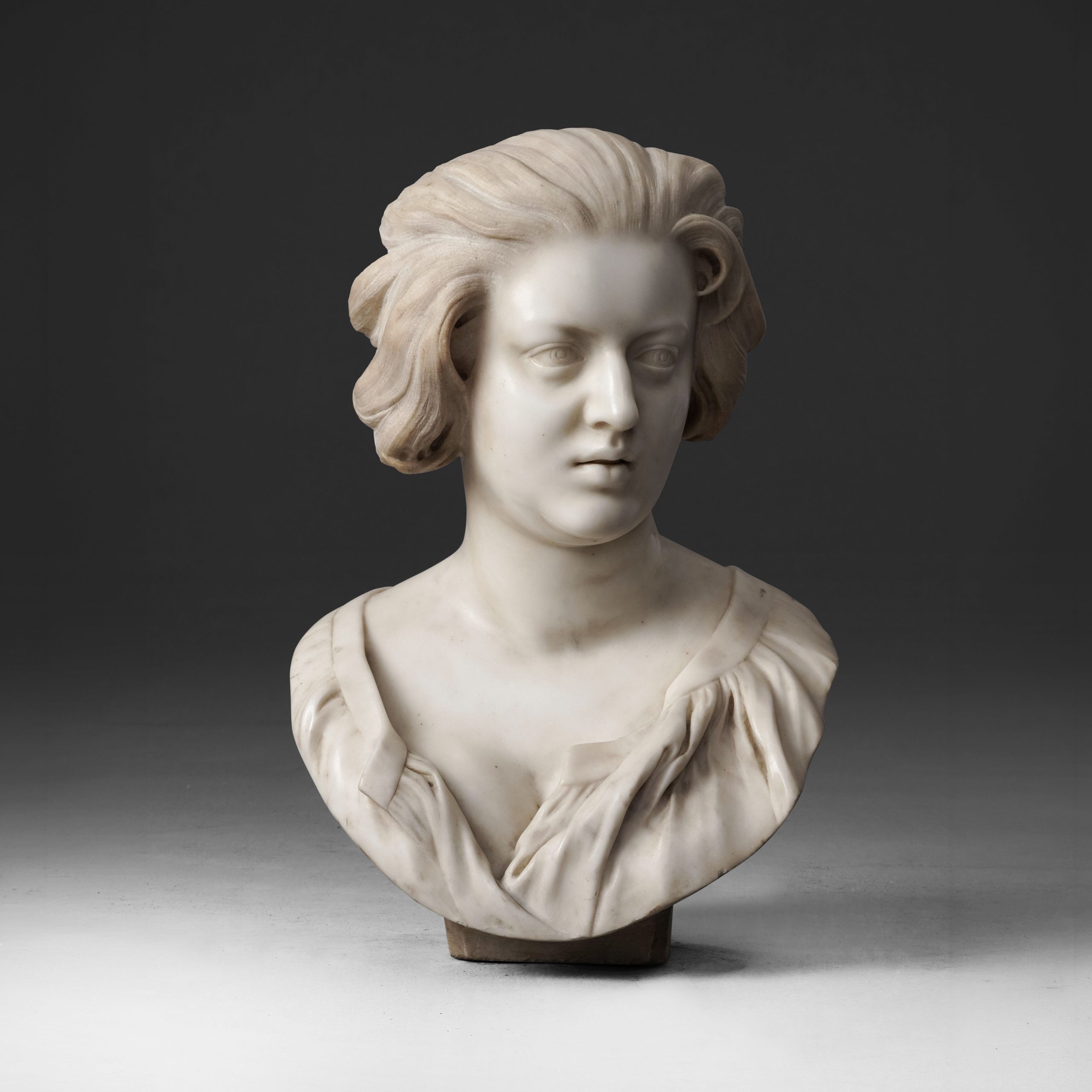
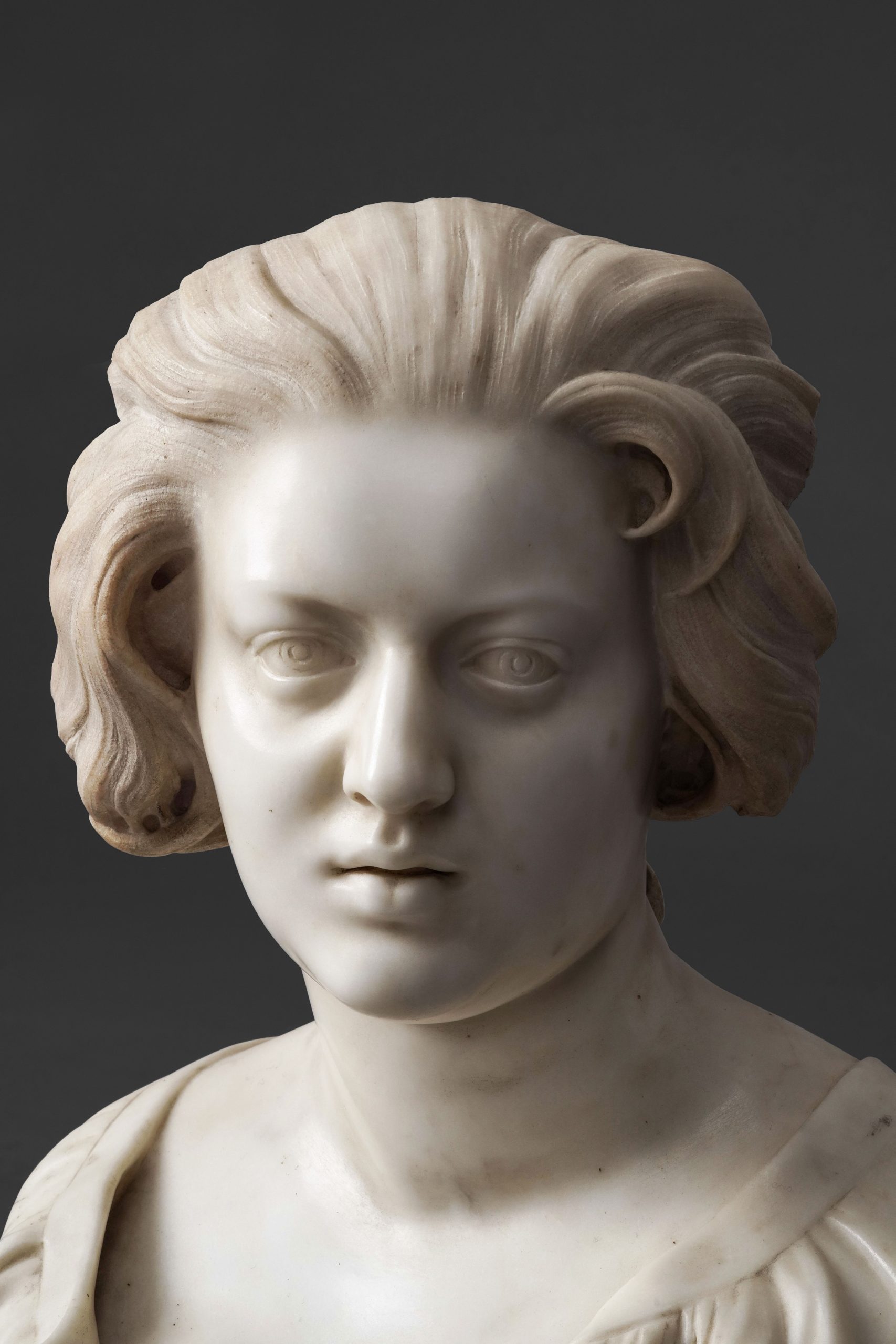
Among the most remarkable works in the entire sale is the Bust of Costanza Piccolomini Bonarelli (lot 11). The evocative portrait is believed to be a contemporary copy of the famous marble depicting Costanza Piccolomini, the wife of the sculptor Matteo Bonarelli, executed by Gian Lorenzo Bernini, with whom she was his lover between 1637 and 1638.
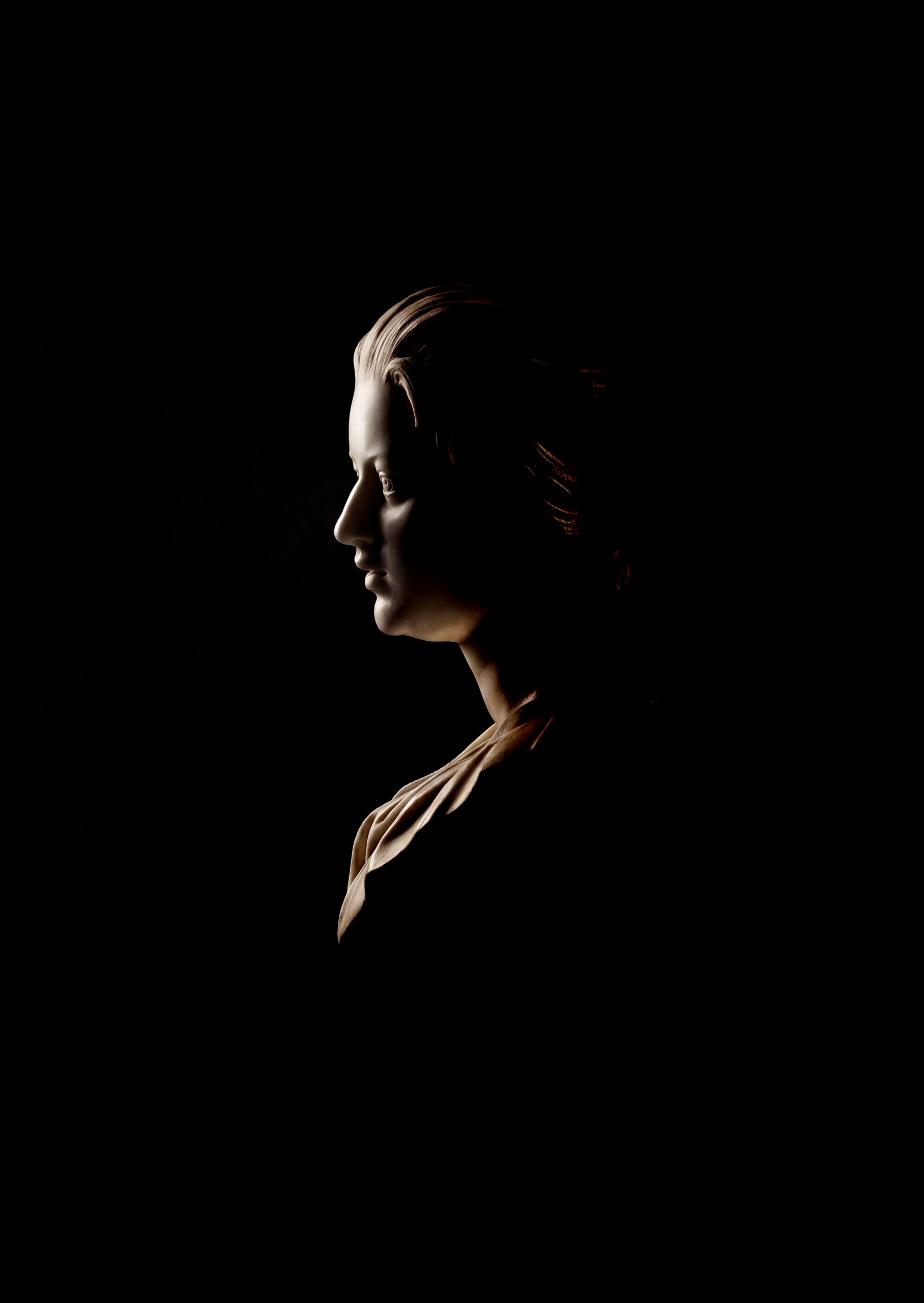
The Bernini work, today housed in the Museo del Bargello in Florence, is unique within the artist’s production, as it was intended for his own private enjoyment and displayed in the intimate setting of his Roman residence. It depicts the young Costanza with a thick, almost disheveled mass of hair, a rebellious lock falling across her temple, and an expression that appears almost surprised; her full lips, slightly parted, seem on the verge of whispering something to the viewer.
The smooth, pale skin and shoulders are covered by a wrinkled chemise which, opening at the front, reveals part of the right breast, giving the entire depiction an intimate and sensual aura.
These stylistic features are also found in the marble presented here, first studied by Ursula Schlegel and published in the journal of the Kunsthistorisches Institut in Florenz in 1994 (vol. XXXVIII), where the only two known marble copies of the original documented at the time are compared.
The scholar advances the following thesis:
“This reproduces the original in an extraordinarily faithful manner, even though the marble block available to the sculptor was slightly smaller. There is no doubt that the copier’s main interest was the depicted person. The work could only have been executed in the immediate vicinity of the original.
Considering the few years during which the bust remained in Bernini’s house, before his marriage in 1639, the copyist must be sought within his closest circle. One must ask who could have been interested in a copy of the bust of Bernini’s mistress without risking making him an enemy. In my view, only Costanza’s husband, namely Matteo Bonarelli, who, as far as is known, had been working in Bernini’s workshop since 1636.”
Beyond the historical-artistic significance of the Bernini bust, the story connecting the Baroque genius and the young Costanza — his model and lover — is equally dramatically fascinating. The features of her face, although transformed, will reappear in the marble head of Medusa executed by Gian Lorenzo Bernini between 1638 and 1645.
Costanza, who came from a cadet branch of the noble Piccolomini family of Siena (Viterbo line), though with limited financial means, married at just eighteen in Rome the sculptor and antiquarian from Lucca, Matteo (“Matteaccio”) Bonarelli, who was ten years her senior. The couple moved to Vicolo Scanderbeg, opposite Bernini’s residence, where Matteo became his pupil and collaborator.
Costanza, an intelligent and enterprising twenty-two-year-old, began to take care of her husband’s workshop and thus met Gian Lorenzo Bernini, who fell in love with her and made her both his lover and model.
The situation took a tragic turn when Costanza, described as a free-spirited woman, began a parallel relationship with Luigi, the younger brother of Gian Lorenzo. Once the affair was discovered, Bernini lost control.
As evidence of this blind rage, there remains the heartfelt letter written by Bernini’s mother, Angelica, in the autumn of 1638 to Cardinal Francesco Barberini, imploring him to “cool the fury of this son” who, “feeling himself master of the world,” had threatened his younger brother with a sword.
Finally, blinded by jealousy and an obsessive patriarchal need for control, Bernini sent a servant to disfigure the young woman’s face. This act had already been defined in the past as an atrox et grave delictum (“atrocious and grave crime”) by the famous Roman jurist Prospero Farinacci.
However, it was the victim who paid the heaviest price: she was confined to the monastery of Casa Pia de Urbe for the crime of adultery, while the servant, the vile material executor, was punished with exile. Bernini received a financial penalty of three thousand scudi, later remitted, likely also thanks to the favorable endorsement of Pope Urban VIII, who described him as a “rare man, of sublime intellect, born by divine disposition and for the glory of Rome to bring light to this century.”
The story of Costanza Piccolomini Bonarelli is not only a dramatic chronicle of the seventeenth century, but also a disturbing and lucid anticipation of the toxic dynamics that still affect contemporary society. The response of the institutions of the time also tragically mirrors the failures of the present.
Her condemnation to a monastery indeed embodies the painful archetype of secondary victimization that women still denounce today in courtrooms, in the media, and in public debate. Just as still happens today, the victim was blamed for her moral conduct and sexual freedom, transformed from injured party into accused.
As the art historian Tomaso Montanari has pointed out, Bernini acted “like the worst kind of modern man,” physically attacking the woman he considered his private property.
Despite the violence she suffered and the weight of a social and legal system entirely aligned against her, Costanza emerges as an extraordinary lesson in resilience and a hymn to self-determination that still resonates powerfully today.
Categorically rejecting the role of passive, submissive, and marginalized victim assigned to her by male power, once she regained her freedom after her period of confinement, she took her life back into her own hands. She returned to live with her husband and, demonstrating remarkably modern entrepreneurial skills, became one of the wealthiest and most respected art dealers in seventeenth-century Rome.
Upon the death of Matteo in 1654 — who referred to her in his will as “my most beloved wife,” naming her his universal heir — Costanza Piccolomini Bonarelli continued her business with great success and, maintaining to the end a free and indomitable spirit, gave birth to a daughter of unknown father, Olimpia Caterina, ensuring her an excellent education and a substantial income.
Today, looking at that proud and disheveled marble bust, we no longer see the object of desire or the fetish of a jealous sculptor, but the visual manifesto of a woman who overcame the violence and hypocrisy of her time.
Her bust continues to cry out across the centuries that no form of oppression can extinguish the vital force and freedom of women, offering us a symbol of redemption that remains strikingly relevant today.


First-Half 2026 Results
27 July 2026



Discovering the Top Lots of the Fine Watches Auction
24 June 2026
